

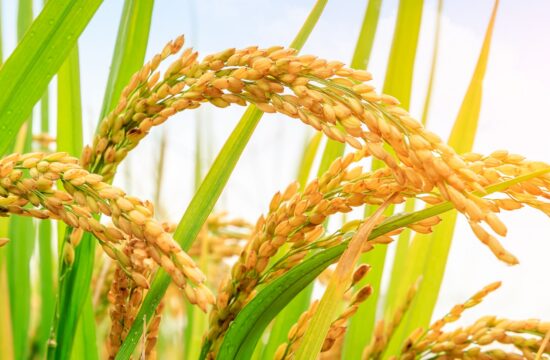
U.S. rice farmers in Arkansas, California, Louisiana, Mississippi, Missouri and Texas produce nearly 85 percent of the rice consumed nationwide, according to USA Rice. With roughly 20 billion pounds of rice grown each year, rice plays a vital role in both the agriculture industry and the consumers it feeds. Given this close connection to the public, the rice industry has spent the past 36 years advancing sustainability practices while steadily improving crop yields. Even with these gains, maximizing production remains an ongoing effort. Nutrient management challenges in rice fields can sometimes be overlooked, yet addressing them is essential to sustaining productivity and achieving the highest possible yields year after year.
Phosphorus, Potassium and Micronutrient Needs in Rice
Across many rice acres, phosphorus, potassium and micronutrient needs can vary widely depending on field history and soil type. That variability makes soil testing essential; nutrient decisions should be guided by data rather than assumptions. Understanding soil nutrient status from the outset, before flooding begins, lays the foundation for strong growth and optimal yield potential.
“Phosphorus, potassium and micronutrients are critical to plant health, grain formation and quality,” says Larry Stauber, Verdesian Life Sciences Technical Development Manager. “I would encourage growers to test soil before planting and not assume sufficient phosphorus, potassium and micronutrients exist in the soil for the full growing season.”
Phosphorus deficiency is often described by the University of Missouri Extension as a “hidden hunger” because visual symptoms aren’t always obvious without directly comparing deficient plants to those with adequate phosphorous. As a result, yield losses can occur before a problem is clearly recognized. Since zinc is another key nutrient that can limit early rice growth when levels are insufficient, it’s important to evaluate zinc risk at planting or early in the season (based on soil test results and field history) to support strong early development and protect yield potential.
Nitrogen Needs in Rice
Once the season is underway, attention shifts to nitrogen, the most critical nutrient for rice production. Because rice has high nitrogen demand throughout the growing season, ensuring adequate availability is essential to achieving optimal yields. However, nitrogen efficiency depends heavily on application method and timing. To maximize its benefits and minimize losses, growers should follow research-based best management practices, as recommended by the Louisiana State University Ag Center.
“Despite rice having specific nutrient management needs, those needs still must be a focus a couple times a season to optimize fertility,” Stauber says. “I recommend tissue sampling mid-season for nutrient insights. Putting on a foliar application is always an option after flooding.”
For Retailers: How to Use These Insights in Your Rice Programs
Retailers can help safeguard growers’ investments by programs around the key decision points in rice production: pre-plant, pre-flood, and mid-season. The most effective conversations begin with a soil test to confirm phosphorus, potassium, and micronutrient levels before flooding, then transition to a nitrogen strategy that carefully considers application method and timing.
For retailers: Partner with your Verdesian representative to develop rice programs that align with the right stabilizers, phosphorus enhancers and biostimulants with your growers’ fertilizer plans this season.
For growers: Talk to your local retailer about how Verdesian nutrient use efficiency products can be integrated into your rice acres to support stand establishment, improved nutrient uptake and greater yield potential.
Verdesian Nutrient Solutions
With the potential for nitrogen loss in rice, a nitrogen stabilizer can help ensure it stays in place and available for plant growth.
“A nitrogen stabilizer like Alterra™ or N-Charge® G would help growers with nitrogen use efficiency,” Stauber says.
To help seed get a quick stand, products like SEED+GRAPHITE® can help get a stand quick, which is helpful as rice is often planted into cold, wet soils.
“We’ve seen growers having a lot of success that are familiar with our Primacy ALPHA® and Take Off® LS,” Stauber says. “If there were ever products that would be ideal for rice growers, these would be the ones, due to increased yield performance and milling quality”
Verdesian Solutions
At Verdesian, we use proven science to help growers get more from every acre while keeping their soils productive for the future. Our products are used in many crops to maximize yield potential, improve crop quality, increase nutrient availability, and much more. The wide variety of biostimulant solutions match or answer the wide variety of challenges growers face. Contact us today to learn more!
Backed by decades of research and real-world results, Verdesian offers solutions that work across crops, regions, and growing conditions. It’s all part of building balance between soil, plant, and environment—helping growers achieve productivity that lasts.
Contact us today to learn more.