
INTRODUCTION
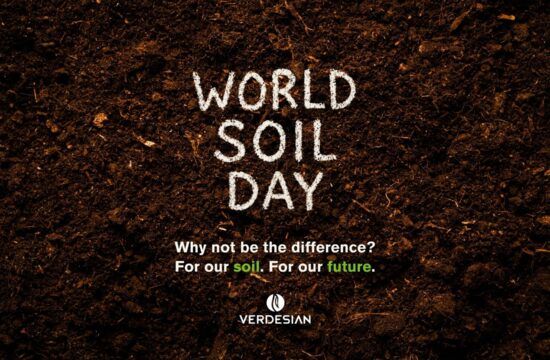
Each year on World Soil Day (December 5), we’re reminded that the ground beneath us is more than just dirt: it’s a living system that sustains every community, and influences every decision made in the field. At Verdesian Life Sciences®, we believe that the foundation of every healthy crop and every resilient field begins with the soil.
In this special “In the Field” Q&A, East Region Technical Specialist Representative Wilks Wood sits down with Ben Hushon—Certified Crop Advisor, partner at The Mill, and long-time Verdesian customer—to discuss the fragility, power, and nuance of healthy soil. Together, they explore what soil health really looks like, and the practical signs growers can look for. They also discuss the benefits of soil microbiomes, nutrient efficiency, and biological products—as well as how stewardship-minded innovation is the key to the future of agriculture.
Wilks Wood: Hello again, Ben. I know you know me, but I’ll introduce myself for everybody else. I’m Wilks Wood, I serve as the Technical Specialist covering our Eastern team here with Verdesian Life Sciences. I’ve been on board for almost two years now. We get the great opportunity to service and work with our Account Managers and sales staff, as well as build relationships with our awesome retail partners like Mr. Ben here. To start things off, could you share more about your background with us—where you’re located, how long you’ve been in the industry, and some high-level details about your operation?Benjamin Hushon: Sure. Hello, Wilks. I’m Ben Hushon, I’m a partner in a family-owned ag retail business called The Mill. We operate in the southeastern part of Pennsylvania and the northern part of Maryland, on both sides of the line. I was born and raised on a dairy farm, so I’ve been around agriculture my whole life. We started The Mill, at least the agronomy side of The Mill, 24 years ago now.
Wilks Wood: That’s incredible. So with all the lessons learned and everything you’ve been able to pick up over that 24-year career, what is some of the best advice you could potentially give someone that is coming into their career, or just starting out?
Benjamin Hushon: Yeah, it’s funny. I’ve been asked that. I guess it’s the gray hair, but I get asked that question more and more the older I get. I think pretty clearly I’ve settled on two things: one, absolutely never stop learning. And the second one—and I actually learned this through agriculture, and I’m even more convinced of it today—is to keep a couple different sources of information.
You know, for a while I would just attend extension meetings—and there’s nothing wrong with extension meetings, I value them and still attend them today—but I started adding in some other sources of info, too. And of course today, that’s endless—when I was first getting started as a certified crop advisor in the late 90s, you know, it was pretty much you had to read it from books. So those would be my two: One, never stop learning; and two, have multiple sources of information.
Wilks Wood: That’s great. I love that. So, with today being World Soil Day, it’s really centered around celebrating and building awareness around soil health not only here in North America, but also worldwide. Over the past few years, that phrase has really gained a lot of traction. Would you mind elaborating on what soil health means for you?
Benjamin Hushon: You know, that’s interesting because, again—that word is relatively new, and I’ve actually found soil health to be currently hard to quantify. I come from the science background of the soil, and the Certified Crop Advisors and farmers want data. They want you to help them through the data, and then you get to this whole soil health space and there’s so many feelings now. I’m not downplaying those feelings—because when you ask me what I’ve seen on my father’s farm or on these long-term farms where we’ve practiced soil health practices, looking back, we go: oh, that would definitely qualify as a soil health practice. Those things are real.
So for me, quantifying soil health is just trying to do things that make sense, you know? Having started in the dairy world and then being around a lot of livestock folks—if a healthy animal or a healthy human is going to survive the next sickness that they’re introduced to, why wouldn’t that same logic apply to our soil? That’s how my simple mind has gotten it. If we believe in adding probiotics to an animal’s gut or adding vitamins to the human diet because the right ones and the right balance help us fend off disease, help the animal, help the young calves get started stronger—why in the world wouldn’t that same thing happen with soil?
Wilks Wood: I think that’s a great answer and analogy. I really like that piece about how it’s hard to quantify. We’re working and striving in that direction, but it’s still something that is difficult to do right now. And so, when you think of a lot of the farmers that you’ve been working with for an extended period of time—or even your own family farm—are there specific signs that you’ve seen or potentially look for that indicate healthy, good soil? What kind of signs do you typically look for to show that soil health is trending in that direction?
Benjamin Hushon: You know, when I was a kid, there was a crop advisor that used to call on my father. So we’re talking in the 70s, and I can remember him. This is when our family farm and most people were still plowing, chisel plowing, moldboard plowing. And he would talk about cover crops and he would talk about earthworms. And I can remember as a little kid, him taking my dad, me, and any of my brothers that would go along—he’d dig up [some dirt with] a shovel and say, look at this, you want this…and I think he had a quantity of earthworms. You want it.
In our part of the world, because of the Chesapeake Bay, I believe that no-till or at least minimum till has become the norm. There’s certainly always exceptions for various reasons, but it’s kind of the norm now. When I think of healthy soil, and I walk onto a field and it’s February, March, and I’m not sure if they grew corn last year or soybeans, that’s a sign. In the last 10 years in our organization, some folks will tell us: Well, I had 250 bushel corn or 210 bushels of corn, and I have to turbo till those stalks. And we go on certain farms and it’s crazy—no turbo tillage, no stalk breakdown products applied and the stalks are gone by planting time. To me that was certainly an aha moment that we had about five years ago, as a group.
Wilks Wood: Yeah, I can’t agree more with both of those [stories]. Diversity with earthworms and things of that nature, as well as the soil microbes being able to cycle through those nutrients in a fast way—that’s a great point. Soil is something we depend on in agriculture—I mean, that’s where everything comes from that we’re doing. Everything comes from that. So with [soil] being such a powerful resource, and something that we have to focus on, what are some of the challenges that you’ve seen in your soils over the past few years?
Benjamin Hushon: Oh, there’s certainly the weather. Maybe it happens every year, maybe it’s always happened, but it seems like we go long periods without rain. And there’s something to it that the healthier that soil is, the more likely that the water that you do get—that inch that may come in 30 minutes—is going to get in the ground. I’ll tell you a perfect example from this summer, and I actually captured it on video.
We were getting hammered with rain. It was June and I drove by a farmer’s field who is no-till and cover crop. But boy, they’d had a lot of rain here because I could see a little bit of muddy water coming out of the field. And he also does some turbo tillage, but nothing crazy. And then I drove in further past my cousin’s farm, and then our farm, which is zero-till, or my father’s farm—and the water was clean. I got out in the rain and videoed it. It was unbelievable, coming off the side of a 30-acre field, all funneling down into a channel, and it was clean. So, I got back in my pickup and went back out to the neighbor, and it was crazy how muddy it was. And there’s a fellow who isn’t doing everything wrong, maybe not even doing anything wrong. Again, Turbo Till has its place for folks that want to—but just to think about the amount of water that was going in the ground, that even what was running off was coming off clean.
But this summer we had a long period of dry weather, and my brother Bill and I’d be in the field and go, there’s still moisture out here. Of course this is when corn’s up and growing well—June, July—but we’d been in fields that were all dried up. We were already seeing drought stress in the community, so it’s hard to quantify. We’re sending soil samples away to two different labs, getting words that I’ve never seen before on pieces of paper and charts showing us what they are. We’re trying to quantify soil health. Much of the country is, but for us it’s just these kind of touch-feel things, you see. And again, corn curling in the summer, in the heat, in the middle of the day, or even in a long drought is probably the one that we notice the most, Wilks.
Wilks Wood: Yeah, that’s a great point. So, to that end, like you were saying—this concept of soil health, and this ability to build it, is a long-term investment like we’ve been talking about. It’s something that just doesn’t necessarily happen in one season, right? It’s something we build on. So, in your mind, how do you balance some immediate needs that a grower may have from, a profitability standpoint, to be able to push yield and be able to stay positive?
Benjamin Hushon: Absolutely. I mean, we have to remember that 10 years ago the word sustainability came racing into agriculture, and it wasn’t long until we were like, yeah, don’t forget the farmer has to be sustainable first, so that he can afford to be in business next year as he learns different and new ways to move forward. So, I do know it is a challenge. Stepping into the crop advisor side, it depends on whether a farmer owns the ground or is renting the ground—then, like everywhere in the country, there are farms that they know they have for the long-term, most likely. And there are farms that are going to get bid out every 2, 3-4 years depending on what the contract is, so that’s why it seems like it’s a multi-pronged approach. What does a farmer get paid on? He gets paid on bushels, at this point in time. Hopefully someday a premium on quality and protein levels are going to be a little bit more common, because I think that’s when we’re really going to move the needle in the soil health space.
I think a lot of times, Wilks, the challenge is from the outside people going, oh, the farmer just doesn’t care about the rented ground. No, it’s whether he can afford that long-term investment. And what we’re finding more and more is that farmers are coming to us as certified crop advisors. Saying, OK, this is rented ground, what can I do? And in some cases, they’ll go to cover crop. In some cases, they’ll come get into some of the humic and folic acids, some of the sugars, various things to try to rev up that engine. But again, it all depends on the landowner and the investment in it. So, everybody is asking for something in this space. It’s just whether they’re looking at a 10-year investment or whether they need to get the ROI out this year.
Wilks Wood: Yeah, great point. So from your viewpoint, what kind of role does innovation in this space play? Specifically with biologicals being such a large umbrella that we have been delving into over the past few years—as well as nutrient use efficiency products, things of that nature. How does that play into the soil health in the years to come?
Benjamin Hushon: Right. So I didn’t think about this originally, but we’re starting to see some data in this space. We’re starting to see some things in fields, talking to folks…we’re seeing that sometimes more is less, and trying to get that balance is the goal that we’ve been working on for the last 15 years. Probably when we first started using the original NutriSphere-N® or the original AVAIL®. But the goal was again, thinking about what’s best for the farmer. We’re a family-owned business, and my partner in the business grew up farming, and his family still is. So we’re all very tuned into farmer sustainability, that is the guy who we’re actually selling the product to.
We have noticed, while trying to make the financial decisions and helping coach them through —if you use a stabilizer, there’s a good chance you can use less fertilizer. Now I know some people don’t want to get down that road. We are very comfortable going down that road. We have a lot of data that helps us to know when we can and when we can’t. As a side note, Wilks, we’re starting to see that when we do reduce nitrogen and have a long-term history of good soil health practices, we’re able to get that end even lower. You know, we were excited when we got down below 1 LB per nitrogen per bushel of corn. Now we’re a little disappointed if we’re not at 0.8, and every year they’ll be farms that are consistently under that. And when we look, most of their soil health practices would be an A, where some of the folks that were still struggling at that 0.9, their soil health practices are probably closer to a C, thinking about school grades.
Wilks Wood: Yeah, that’s wonderful. Maybe to expand on that a little bit more, it can kind of be daunting for someone that hasn’t really played with [NUE or biologicals] much, or hasn’t been able to learn with them much. So, in your opinion, for a grower wanting to start down this path, what would be one of the first steps that you would recommend? And if it’s different between owned ground versus rented ground, maybe delineate.
Benjamin Hushon: That’s a broad question, but OK, here I am—I’ve sat through your meeting or one of your field days. Where can I start? And generally we start with corn. We start by saying, split your nitrogen and get a stabilizer on both applications. We don’t go down the road too far about reducing nitrogen, necessarily. We just ask people to start there, and then we also spend some time talking about the differences of the nitrogen stabilizers. I can remember sitting in a Winfield United meeting 15 years ago and a scientist got up and explained what, at that time, the three main choices were on the market, and it was quite an aha moment because they offered all three. They said, we just want you to know how they work.
So, without naming other names, I’ll tell you that’s how we landed 100% with Verdesian: because what it doesn’t do in the soil is sometimes as important as what it does do, and that’s where we would start. We’d start with getting the nitrogen stabilizer on and splitting that application. And then in the soybean space, same thing with the phosphorus. We don’t split the application, but we do highly encourage people start stabilizing that phosphorus… But again, go back to one of the first answers…It’s about how to use it more than necessarily which one wins.
Wilks Wood: Fantastic. And you know, to that degree, you’ve been with Verdesian and have worked with our products for quite some time. Could you speak to which one specifically has had a large impact on your operation, maybe for you there at The Mill as well? Obviously from an ROI standpoint for your growers.
Benjamin Hushon: Yeah. Everybody wants to talk about nitrogen, but the one that I think we have the biggest impact on a farmer’s ROI is phosphorus as time moves on. Because we started working with AVAIL® in 2007 or 8, the original AVAIL®, and then of course migrated to the AVAIL® T5—and since then a lot more chicken houses are coming into our neighborhood, so there’s a lot more manure coming down, especially out of Pennsylvania and Maryland. So that’s caused us to sell a lot less phosphorus, and we’re able to protect a lot less of it than we did, say, 10 years ago. So that has certainly evolved.
But now we’ve moved into Phree-uP® and it’s pretty neat, Wilks. The first time we put out Phree-uP®, we put it out in a replicated trial. We had a field day, and every group of farmers that came through, we sent two of them out—one to the AVAIL® treated and the other to the Phree-uP® treated plots—and had them bring back six soybean plants five times that day. These folks walked out, picked up plants, brought them in all five times. There was a clear difference when we got to harvest in the corn plot. I don’t remember the bean result, but in the corn plot we had picked up 10 bushel. And we use less phosphorus. We use MAP in our organization. We had applied 20% less and actually had a better yield out of it. So, we quickly switched to Phree-uP® and have been very happy with it, because it’s also releasing tied up phosphorus. It’s not just protecting what we’re putting down.
And then certainly on the nitrogen, we’ve been on the trail. We’ve pretty much stayed with N-Charge® or Nutri-Sphere-G®. We treat all our urea with the N-Charge G®, and there certainly are farmers or crop consultants that don’t want us to reduce the amount of nitrogen—but we tell folks that when we’re using that product, we’re confident in a 0.8 NUE with it. Again, I tell them: If you can’t believe the fertilizer guy that you can use less urea or less nitrogen, I don’t know who in the world you’re ever going to believe, because we make money selling. Do we make some money selling Verdesian products? Absolutely. Does it make more sense for us, purely financial, to sell more fertilizer? Absolutely.
Many years ago, my business partner and I were sitting in a meeting in Iowa—I think about when the Iowa Water Works was starting their lawsuit—and we’re like, you know what, we need to get back home and be part of the difference. Because we’re convinced, I’m convinced, farmers are the solution to these environmental problems we have. For a while I think they were getting all the blame and I think now many of the environmental groups realize the farmers are who’s going to fix the issue that we have, or at least many of them.
Wilks Wood: You helped tie a lot of different things together, so that was perfect. And with the use of Verdesian products, we don’t always promote or condone being able to cut rates, or use this product to reduce rates. But you know, we have retailers, and we’ve shown at various other third-party research trials that this is something that can happen. And that just shows your willingness to go and do what it takes for your growers to be successful, as well as highlight how these products are benefiting the soil in in a very real way.
When it comes to new products or things that are being brought to you, how do you decide when it’s something you want to bring on board and bring to growers? What’s the process, on your side, of bringing something into your nutrient management plan long term?
Benjamin Hushon: That’s a really good question, because there’s more and more products coming out now with an awful lot of claims. So, we look at it a couple different ways. We never stop trialing products. Sometimes it’s as simple as somebody giving us a case of their magic juice, and we get it out on a farm that we know is doing yield data or has yield monitors, and we have access to it through our technology side of our business. But we start with our trusted vendors first. You know, I read this all the time. Farmers look to their trusted advisor, ahead of or more favorably than they do a lot of other folks in the AG industry. Well, we’re the same way—there’s all kinds of vendors out there, but we want to partner.
We’ve learned over the years in the case of Verdesian—I’ll hear about a product that you guys are thinking of bringing out, and then 2, 3, 4 years later I go, huh, I haven’t seen that product. Now we got to figure out its place, et cetera. And it’s just like I mentioned on where to start with nitrogen. We don’t recommend folks reduce the nitrogen the first year, because I think that’s a process also. Looking back, I guess that’s probably part of this soil health thing that we’re all trying to define.
So, we start with a trusted vendor. That’s the one we’re going to put in our personal replicated trials. We also have a retiree from the University of Maryland who used to run one of their research farms, Ron Mulford. We take products over to him and I can assure you, we are matching up competitive products. We’re not just drinking the “Verdesian Kool-Aid.” We are constantly trying other products, and even other ideas. You know, we have people come to us once in a while and say, well, you don’t need all that stuff, if you just use our 15% humic acid, you’ll do everything they say they’re doing and more. And we put those out to the test also.
Wilks Wood: Wonderful. And this is something I’d love for you to expand on some more, because in my role I get the opportunity to cover a large area and see different operations. I’d love to hear about those trial platforms and the system that really binds these technologies to assess how they best fit for you all.
Benjamin Hushon: We really began this journey around 2010 or 2011, when we noticed more growers had yield monitors and were ready for more structured on-farm testing. Although The Mill’s agronomy business started 24 years ago, I’d already spent 15 years as a certified crop advisor, so by about a decade ago we knew it was time to get more intentional with our trials.
We still use the weigh wagon and run traditional replicated trials, but we’ve learned that broad-acre testing is just as important. We review extension data and results from small-plot work and trials. When a product looks promising in small plots, we take it to two or three farms with different management styles. We often see different responses on farms with manure—especially chicken manure—so we try to capture that variation as well.
About 15 years ago, a neighboring farm offered us 60 acres to use however we wanted, with only one condition: keep it looking good. Because of that, the owner usually alerts us before we even need to scout. On that farm, we focus heavily on fertility work and leave weed-control trials to others. More recently—because tar spot has become such a challenge—we’ve added some fungicide trials, but the foundation of our work remains nutrient management.
This setup lets us be bold in our learning. Before we ever bring an idea to a farmer, like reducing nitrogen rates, we want to test it under realistic conditions. Even though nitrogen prices today are reasonable (phosphorus is the one that’s sky-high), we still only test concepts we think growers would actually consider.
In our annual Crop Showcase, we compare these new approaches directly against standard farmer practice in the same field. We rarely include a zero-fertility check, because it doesn’t reflect how real farming works. Instead, we concentrate on practical comparisons. Then we combine three data streams: on-farm trials, small-plot trials, and our 60-acre showcase. If something consistently performs well, we take it back to eight or ten farmers the following year to test on their operations.
Wilks Wood: It’s great. So we’ve been talking about Verdesian, and I’m definitely a little bit biased to us as a company for continuing to innovate and bring science and stewardship together…So with the partnership that we have with you, how do you foresee this kind of playing out: Verdesian itself being able to impact the next generation, as well as what that means for our work with you and other retailers?
Benjamin Hushon: That’s a great question. I’m involved with the Mid-Atlantic 4R Association, which is a volunteer group made up mostly of AG retail professionals. Every so often, I take off my “Mill hat” and put on my “4R hat” at industry meetings. I’ll pull other dealers aside and say, guys, we have a real opportunity to make an impact here.
One of the most rewarding parts of this work is talking with non-farming neighbors. I remind dealers across Maryland and Pennsylvania that when someone confronts you—saying things like, Are you the ones poisoning the ground?—you don’t have to get defensive. It’s far better to say, We may not agree on the premise, but let me tell you what farmers are actually doing in your area.
Then I walk them through the progress: Years ago, we applied 1.0–1.25 lbs of nitrogen per bushel of corn. Today, we’re disappointed if we exceed 0.8 lbs. When you multiply that difference across a 200-bushel crop, the impact becomes obvious. We also talk about products that keep phosphorus in place and out of waterways. And rather than arguing about whether agriculture is the only source of phosphorus—which it isn’t—I focus on what we can control and what farmers are actively doing to improve things.
I can’t say our 4R membership has quadrupled, but the conversation is happening. And it absolutely changes the tone when you talk with a neighbor who might not love seeing a herbicide logo on your shirt. In fact, one conversation like that led to an invitation to speak at a local Lions Club—proof that these dialogues matter.
From a product standpoint, Verdesian gives us meaningful tools and real stories to share with the community. And importantly, the products work. It’s actually been amusing: the last two times Verdesian released a new product—Phree-uP® being the most recent—within a year someone showed up at my door selling a product with a flashy name and nearly identical claims. That tells you Verdesian is leading the space. Competitors are clearly trying to imitate what you’re doing, which is flattering in a way, but it also pushes Verdesian to keep delivering true winners and anticipating the next need.
And while I didn’t start out focused on soil health, it’s obvious now that soil health and nutrient stewardship go hand in hand. The connection between the two is undeniable.
Wilks Wood: Yeah, absolutely. Really appreciate all your insight. I know this can be a hard task, but if you could boil everything down—what’s your message for why protecting soil health matters? What would that highlight be for you?
Benjamin Hushon: I’d probably start by trying to get a read on whether [the grower is] 100% driven by numbers, or whether they are invested in their community. And most farmers are invested in the community. They want to be perceived as being good people, and they are in most cases. So, I’d probably try to have a conversation on how you can make an impact. You know, we can all be unhappy with our state capital, or our nation’s capital, the environmental people, whoever it is—we can be upset about how they’re perceiving something—but a majority of the ground that flows into these streams, we can make a difference on. Every farmer I’ve ever met, even if they don’t have children of their own that they think are going to farm the land, they want to leave it better than they found it. I would probably start there.
I mean, we’ve learned so much over the last twenty-five years. It’s honestly been like a whole new revolution. And why wouldn’t it be? I tell [growers] all the time: the fertilizers were invented in the 40s and the 50s. Why would it be strange that we have found a better way to manage them, products to add to them, different versions of those products? I would just encourage them to be part of the solution and to be leaders. And in our community, I remind anybody that I know is renting ground, You want to go win a landlord over? You go tell them that all your nitrogen is stabilized. And we’ve done this for a few farmers that have asked—we’ll hit some bullet points of what Nutri-Sphere-N® or Trident™ or Phree-uP® are going to do for them, and we don’t necessarily preach about reduction. We talk about how it keeps it from getting into the water source, and there’s a good chance the competitor is not going to come to that same driveway and talk about that. So again, that’s how I boil it down. We tell people, why don’t you try to be the difference? And we talk about—brag about—what you’re doing. So many of these farmers, they think the landowner doesn’t care. They absolutely care.
Wilks Wood: Yeah, that’s great. I love that. I can’t agree more. Over the past few decades it seems like we’ve been in the middle of a soil revolution, with everything we’ve been able to learn and see and do. I really appreciate you being at the front line of that, and all the work you’ve done, and I appreciate your time today. That was fantastic being able to sit and chat with you. If you have any other comments or closing thoughts, we’d love to hear.
Benjamin Hushon: I’d just say to farmers or AG retailers: find a partner on this journey. I would recommend Verdesian to be that partner, but find somebody and keep learning. Start with them somewhere. Don’t start with all six products that they offer because that’s what happens—they show you the whole catalog. Just ask them where you should start. That would be my advice.
Wilks Wood: Love it. I appreciate it.
CONCLUSION
As this conversation reminds us, healthy soil isn’t just a buzz word or an abstract idea. It’s a day-to-day reality that impacts stand establishment, yield potential, input decisions, and the way fields interact with water and communities around them. On World Soil Day, and every day, Verdesian Life Sciences is proud to work alongside growers, ag retailers, and advisors who recognize that the future of agriculture depends on the balance between science and stewardship.
By protecting the soil microbiome, improving nutrient efficiency, and grounding innovation in on-farm trials and practical ROI, we can keep making progress, season by season, acre by acre. As Ben puts it, every operation has a chance to be part of the solution. Why not be the difference?
Disclaimer: Reduction in fertilizer rates be a local decision and based on local data and information. Always read label instructions.
Start a Conversation with a Specialist