

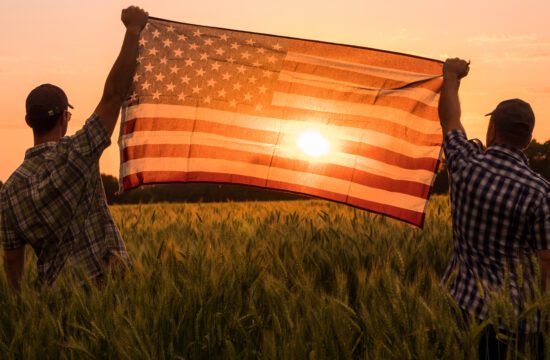
America’s 250th anniversary is a milestone built on countless contributions, innovations, and legacies, but few run as deep as agriculture. When the nation was founded, nine out of ten Americans lived and worked on farms, preparing soil, planting seeds, and harvesting crops that fed their communities and helped develop a young country. In 2026, agriculture looks different, but the country’s dependence on growers remains as strong as ever.
At Verdesian Life Sciences, several of our colleagues come from farming families who have worked the same land for generations. Their stories trace the evolution of American agriculture itself, from horse-drawn plows to precision technology, and from subsistence farming to feeding a growing world. As the United States celebrates its 250th anniversary, we’re honoring those families and the growers across the country whose dedication has helped sustain the nation through every era.
Seeds of a Nation
The earliest seeds of American agriculture were sown by families who moved in search of opportunity and stayed through hardship. Vice President for Strategic Retail Accounts, Dave Schwartz’s ancestors were among them, immigrating from Germany in the late 1800’s, and eventually settling in Iowa where the land they cultivated has now been passed down more than five generations.
A similar story took root in Nebraska, where Account Manager Justin Meyer’s family arrived 100 years after the nation’s founding. In those early years, 40 acres of land could sustain large households, and families remained closely tied to the land, livestock, and resources available to them. With limited technology or formal education, the key to their success was a wealth of practical knowledge, hard work, and perseverance in the face of adversity.
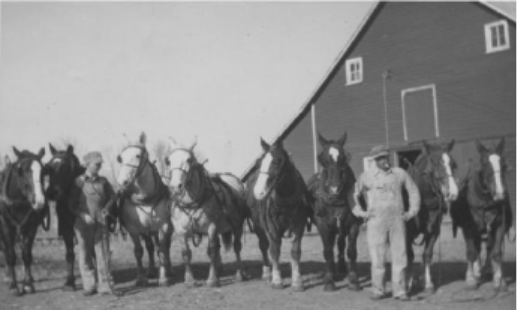
Justin’s grandfather and great grandfather with the horses that powered their farm.
That same resourcefulness shaped Associate Account Manager, Olivia Chalfant’s family in the generations that followed. For Olivia, a fifth-generation farmer, agriculture means understanding and respecting the same land her ancestors carefully tended and protecting it for those that come after her. That legacy was built by ancestors who immigrated to the United States from Ireland and Canada, Czechoslovakia, and Sweden, each contributing traditions and values that continue to shape her family’s approach to farming today. Born in the early 20th century, her grandfather worked the ground with mules, walked beans by hand, and abided by the philosophy, “if you put it in the ground, it’ll grow.” What started as a necessity has become a grounding reminder that farming is about building a solid foundation while honoring the land beneath your feet.
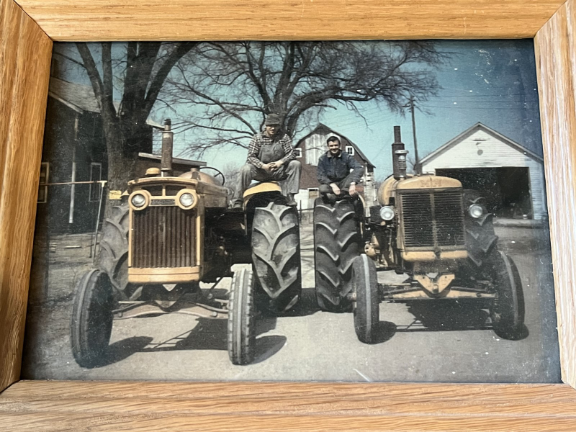
Olivia’s grandfather and his friend on the family’s home farm — the generation that laid the foundation.
A New Era Takes Root
The mid-20th century brought new possibilities to American farms, but with increased potential also came added pressures. Farmers returned from World War II to a changed agricultural landscape, and conservation took on new importance as first-generation pesticides and excessive fertilization resulted in soil deterioration across the country.
Dave’s grandfather became one of the first conservation board members in his county, pioneering sustainable practices like terracing and seeded grass waterways to protect topsoil from erosion. Even before the term “soil health” was used in mainstream agricultural conversation, these decisions were investments into the earth and the land’s future productivity.
Yet protecting the land was only part of the story. The structure of the American farm was also changing. From 1930 to 1970, the total workforce employed in agriculture fell from 21% to 4%, and agriculture shifted from many small, diversified farms to fewer, larger, and more specialized operations.
Justin’s family witnessed this shift firsthand. Previous generations raised everything from sugar beets to hogs and chickens. Today, the same farm primarily produces corn, soybeans, hay, and beef cattle. For families like the Meyers, specialization was a means of keeping the farm viable for the next generation.
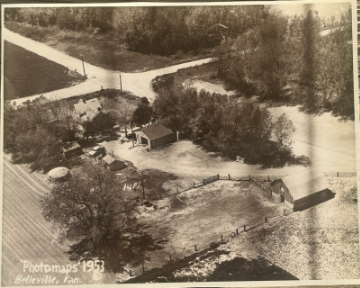
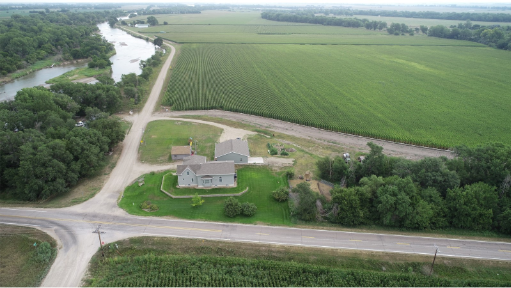
The Meyer family farm in Gibbon, Nebraska, 1953 vs present day.
Farming Smarter and Getting More from Every Acre
The late 20th century marked a turning point for soil health as more farms shifted away from tillage. As an early adopter of no-till farming, Dave’s father recognized that leaving soil undisturbed protects its structure, supports its biology, and preserves its long-term productivity. Dave himself has continued that commitment, farming 100 percent no-till since the early 1990s — a practice that reflects both his father’s wisdom and his own belief in preserving the land for the future. The instinct to protect the soil never changed, but the tools available to do it kept evolving.
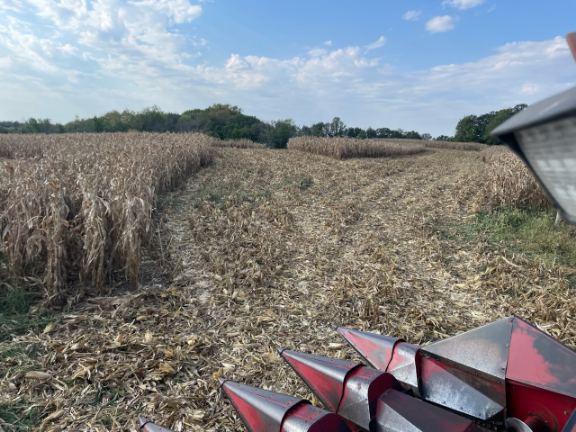
Dave’s corn fields, farmed 100 percent no-till since the early 1990’s.
Precision agriculture has transformed what’s possible on the modern farm. Farmers can now monitor field conditions in real time, and hybrid seeds are selected trait by trait to match specific growing environments. Even with new technology and a shifting farm structure, the values held 250 years ago are not lost. They continue to shape how growers approach stewardship, productivity, and long-term success.
Modern farms still face adversity, and growers continue to work toward maximizing yield despite rising input costs. Nutrient use efficiency technologies have become one of the latest tools helping farmers meet that challenge, enabling them to get more from every dollar invested, protect yields, and build farms that can be passed down to their children.
A Legacy Written in the Land
What unites American farms across generations, geography, and eras is a commitment to leaving the land better than they found it.
For Dave, that means helping seven grandchildren understand the importance of being good stewards of the land. For Justin, it means living just miles from the farm where his family settled nearly 150 years ago and raising three sons he hopes will become the sixth generation to work that ground. For Olivia and her husband, it means raising their three-year-old daughter with a simple goal: “To build something that lasts—a thriving future for our family and a legacy of resilience for the generations who follow.”
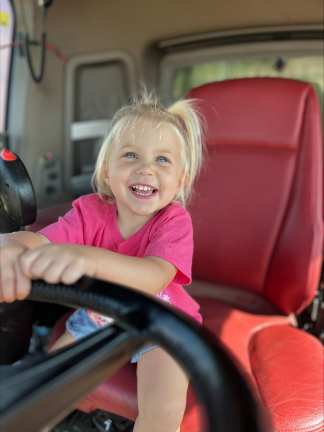
Olivia’s daughter following in her parents’ footsteps.
The stories of the Schwartz, Meyer, and Chalfant families are not outliers. For two and a half centuries, multigenerational farming families have weathered drought, war, and market collapse, emerging with the resilience, ingenuity, and determination to keep moving agriculture forward. As the United States celebrates its 250th anniversary, their stories serve as a reminder that agriculture has been woven into the nation’s history from the very beginning. The systems and technologies may have changed, but the values that sustain farming families and the communities they feed continue to endure.