
INTRODUCTION
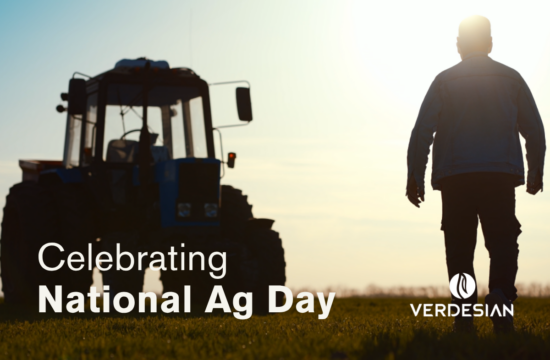
At Verdesian Life Sciences®, we believe the most meaningful insights in agriculture come from those who are out there getting their hands dirty. Each year on National Ag Day, we take a moment to recognize the incredibly dedicated, steadfast people behind our food, fiber, and fuel. These growers navigate uncertainty, embrace innovation, and make critical decisions every day to keep the industry moving forward.
In this special panel discussion, Director of Agronomy Mike Zwingman is joined by several Verdesian team members who are also growers across the country. From Iowa to Tennessee to Nebraska and Illinois, they share real-world perspectives on the real-time challenges—including rising input costs and evolving management practices. Together, they explore how experience, innovation, and a forward-thinking mindset are shaping their own decisions in the field, and what gives them optimism for the future of agriculture.
Mike Zwingman: I’m Mike Zwingman, Director of Agronomy for Verdesian Life Sciences. I’m located in Nebraska, have a background in corn and soybean operation up in Northeast Nebraska, and I’ll be moderating this discussion today between my colleagues.
Let’s have everybody give us a brief introduction and include where you live, what you grow, how you got into agriculture and what your role is for Verdesian.
Dave Schwartz: All right, I’m Dave Schwartz, and I live in central Iowa. I’m the VP of Strategic Retail, and I’ve been with the company—and previous companies related to Verdesian—for 20 years. I’ve been farming all along, farming the family farm. I bought another farm beside it and grow corn. And I’m a continuous corn farmer, 100% no-till, 100% cover crop, big in water quality and soil health.
Since I’ve been playing with them of the last 15-20 years, Verdesian products have helped me increase my yields almost 100 bushels to the acre.
Andy Ulmer: My name is Andy Ulmer. I am a key Account Manager for the Southeast. I live in Middle Tennessee and grew up on a corn, soybean, and wheat rotation farm. We also had beef, cattle and lots of sheep. We currently have a large cow herd we run.
I’ve been around the farm my whole life, and I’ve been with Verdesian going on nine years. When I think about Verdesian products, I think about how they’ve helped increase forage, because really that’s what cattle people are about. We’re forage farmers, and we use quite a bit of the lineup of Verdesian to help increase that.
Kevin Wickham: I’m Kevin Wickham. I’m an Account Manager for Southern Illinois. I have been with Verdesian about six years. You know, my love for farming started with my grandfather running a fertilizer company.I helped him through my younger years, and then I actually took an internship there after college, and I helped him on his family farm.
About six or seven years ago my father-in-law retired, so I took it over and was able to start my own farm. I raised corn, soybeans and grain sorghum. I like the benefit of trying Verdesian’s products. That really makes my confidence level go up a lot, because I can assure the retailer that I’m calling on that I have seen these products firsthand and have all the confidence behind them.
Justin Meyer: I’m Justin Meyer, I’m located in central Nebraska. I’m an Account Manager here in the eastern third of the state, for the most part. I’ve been with Verdesian for a little over two weeks now, so fairly new, but I came from retail AG and have been using Verdesian products and testing them out in local environments. In my operation, I grow corn and soybeans, and I have small cattle herd. I’m looking forward to seeing what we can do on some sand around here.
Mike Zwingman: Excellent. So, what are the biggest challenges you’re all facing on your own farms today?
Dave Schwartz: Profitability. Being able to grow enough yield and find the price so that the crop sustains us and keeps us going.
Andy Ulmer: I agree with that. I know here in our area in the last two weeks, some of the fertilizer prices have really jumped—and a lot of people were expecting it to maybe go the other way, just with the commodity price where it was at. And the biggest concern is how to keep that fertilizer where you’re putting it for the year.
Another big challenge is managing input cost and figuring out our best ROI. I cannot complain about cattle prices right now at all, but the inputs of everything it takes to maintain that cattle are a lot higher than they have been. So, it’s managing our input costs, and then trying to be sure we invest in what has the best ROI.
Kevin Wickham: I would agree with Andy there. You know, it’s all about the ROI. The grain markets have been kind of sluggish. We’ve got a little bit of rebound, but you know we’re all about yield, right? And we’ve got to have the yield even though the prices are low, we’ve got to have the yield to get bushels, and bushels are what pay the bills.
Mike Zwingman: Yeah, to Andy’s point, costs across the board have gone up. It’s really hard to get to where you want to be when the price of everything has jumped up the way it has in the last few years.
Andy Ulmer: For us in the beef industry, people said, Well, you’re making a lot of money now in cattle price. The cattle prices are great, but my feed’s $100 a ton higher this year than it was last year, even though corn is cheaper.
So, it’s all the stuff that goes into it, you know? Like you said, diesel’s $5 this week, so I have to take that into account when we’re driving and hauling cattle. It’s a lot to think about.
Mike Zwingman: With all the new tools and new products that are coming out of the market, how do you stay informed and make increasingly complex decisions in your operations?
Dave Schwartz: Well, it starts with being aware and paying attention to a lot of things. This fertilizer market has taken a sharp increase lately, which is why prepaying early and locking prices in was important for me on seed and fertilizer.I already have a heck of a bonus for doing that.
And then the other thing is, when it comes to fertilization: if you have soil test levels that are optimum or high, cutting back on the phosphorus is probably a good option. Add in some different products that we offer, like Bioactivator and AVAILÒ—and of course we stabilize every pound of nitrogen applied.
And cutting back on some of those units, because we’re putting it on at different times of the season and stabilizing it, has made a big difference. And I think we’re probably doing it a little better than the average guy, because we’re paying attention to every practice that we do. We’re making sure that we’ve got efficiency in every one of our products.
Kevin Wickham: I know from prepaying my anhydrous price, it’s over $100 a ton higher now, versus when I prepaid it. No different than the fungicides and some of the biostimulants and stuff like that. I’ve been in this industry for 25 years and know that a lot of these products work and gain your yield.
It’s hard to write that check in the summertime, because you don’t want to get rid of that, right? But you know in the back of your mind—after seeing these products and doing field trials and MAT trials and all that—that it truly does make a difference on your bottom ROI. So, prepaying has been a big thing for me. It does take that emotional decision out of it.
Justin Meyer: I guess for me, the difference has been talking to people in different positions. It’s important to stay in touch with contacts throughout the industry to try to make an informed decision. All of us are trying to make the best decision we can with what we got.
Andy Ulmer: Kevin mentioned the word emotion. I cannot farm for today. I have to farm for tomorrow. I have to farm for the future, and when you’re thinking about that, you have to take that emotion out. But also, you have to do some forward thinking, some hedging, some placing about what things look like 6 months from today and what you can expect. And I treat my soil the same way. If I get out of the mindset where I farm for today, I’ll not put the inputs I need to put because I’ll get mostly tied up in my checkbook.
What I have to do is think about what’s going to happen next year if I don’t take care of the soil today.So, I think that’s the biggest challenge: thinking ahead and not getting caught up in in the expenses.
Mike Zwingman: I think there’s a couple things that go into play, like surrounding yourself with a good team of professionals to tell you hard things and taking the emotion out of it as much as you can. It’s really hard to separate the farming lifestyle from the farming business.
So, what’s one decision you made on your farm that had a major impact?
Dave Schwartz: Last year we experienced a new disease that we had never had before called Southern Rust, and I’ve been getting along really well using nutritional products and avoiding using fungicides.And I didn’t use the fungicide this year, and it cost me dearly. So, it’s probably one of the biggest mistakes I’ve made in my farming career.
Justin Meyer: I guess for me, it’s been on some of our sand. After we grow soybeans, there’s not a lot of residue left. We come back with a cover crop, and most years it’s a good thing. The last two years it’s been so dry we get really uneven emergence in the spring after we go in and strip till and plant.
We can’t keep consistent moisture. We tried no till after, to try and conserve a little bit of that moisture and haven’t had great luck getting even emergence that way either. So, trying to pick and choose where we can go with the cover crop, and using sprinkler irrigation, pivot irrigation—instead of gravity irrigation—to be able to make that work a little better.
Andy Ulmer: I’ll admit how important it is to watch the price of potash on Bermuda grass for drought tolerance and regenerative growing back. Those are small mistakes that have cost me. I’ll say where we really started picking up some grass yields is when we started micronutrients and paying more attention to that in our grass crops.
Mike Zwingman: How do you guys evaluate whether something new is worth trying on your farm? With all the new equipment and products and tools and gadgets and gizmos, how do you guys go about making sure it’s right for you?
Kevin Wickham: As far as new products are concerned, there’s been a lot of them that I haven’t found much merit in. But you have to be open-minded, right? Because what are you missing?
A lot of products out here that are brought to you have been tested and showed a positive ROI somewhere, so it’s good to be open-minded. That’s key, because there’s application cost, and these retail guys have to pay their bills, too.
Dave Schwartz: For me, it’s fine-tuning my planter. Mike, I got to give you credit. You got me started. You helped overhaul my planter many years ago, and I’ve been keeping up every year. I try to add something new, attachment-wise, to my planter to increase my efficiency.
That’s saved on seed. It’s also improved yield by not having extra plants out there. I went to the furrow jets this last year, and that was a nice way to place my starter. I really like those, and I’ve been able to incorporate some insecticide with that since I’m a corn-on-corn farmer.
I put all my phosphate on with the planter. Not very many people do that. You’ve got to have phosphate on both sides of that plant, and you don’t need it anywhere but there. That’s really helped my yields. Micronutrients and sulfur have been the other things that have really brought my yields along. As for products, I’m looking for the products that are tested in a similar environment to what I’m in.
Kevin Wickham: I’d say one of the changes I’ve made to my operation in the Southern part of Illinois, with these tight clay soils, is water—getting that plant up and out of the wet soils. As far as products go, I’ve really seen a lot of benefit from Seed + Graphite. It’s done a fabulous job of getting the plants up to a good start with quicker emergence.
When we talk about weed pressure, waterhemp is a major, major concern here in Southern Illinois. If we can get that canopy up and get it closed, it sure helps.
Andy Ulmer: In the forest business, we thought the world was coming to an end when nitrate was going away—and when we learned that Nutrisphere could stabilize nitrogen all season long, it was a game-changer for us to be able to control and manage our nitrogen a little bit better. Also, the use of micronutrients was a big deal, as was soil and tissue testing more often. It doesn’t matter how much you invest or throw out there on top of the ground. If it’s not getting into the plant, we’ve done nothing.
What practices are we using? What fertilizer are we using? What timing are we using to make sure that it’s physiologically getting into the plant as we need it to and producing yields? You know, that’s the big thing.
Mike Zwingman: The yield increases in the last 30 years have been somewhat attributed to genetics, but I think it’s mostly due to our improved management of timings and information and soil and everything else. I think the strides we’ve made in my career, from a yield standpoint, are mostly from adopting new practices and technologies, and thinking about how we use inputs.
Andy Ulmer: Well, if you think about these varieties that have changed so much, they are so much more dependent on timing and rates and things like that. And we’ve all learned to spoon-feed our crops and pay more attention to them, because they need different nutrients. So, these levels that we’re pulling off, these yields today are crazy good. We’ve adapted to learn how to feed them better.
Mike Zwingman: There are no more plow horses. It’s all race horses, right? I think we’ve looked at acres differently than we did before, too. We don’t have acres that we feel are trash or otherwise unmanageable. We have found new ways to manage.
So, what role do biologicals or nutrient use efficiency tools play in your current approach? And why are micronutrients worth the investment?
Dave Schwartz: Well, I can tell you from my experience on my farm that micronutrients added another 10 to 15 bushels per acre. I didn’t realize how depleted I must have been. We did grain samples off some of my crops in those early years, and we were finding very high levels of phosphorus and micronutrients in my grain samples. And I do believe there’s going to come a time down the road when grain quality is going to be rewarded with a premium. That’s been a big one for me.
Kevin Wickham: I think it comes down to trust and confidence, right? You’ve got to build trust with the people that you’re selling to, and I think I’ve got that. If you have confidence in the product, and you’ve tried it yourself, you know what it does. You’re seeing how it affects the plant from watching products during growing season.
Andy Ulmer: I think one of the greatest opportunities we have is to talk about how our products create the opportunity for good things to happen. We apply something, and three months later we have extreme weather change or whatever it may be. Insects, rust, lots of things can happen. But what Verdesian does is create opportunities for good things to happen.
We’ve gone to people’s fields, we’ve dug roots, we’ve taken stalk diameters, we’ve done tissue testing, we’ve done all things—and we sit there with a farmer who is also a friend and say, hey man, you know we can see some differences here. And having those conversations with growers with confidence because you’ve seen it with other people, that’s a good day. That’s a real good day.
Mike Zwingman: As we start getting ready for a new planning season, what are you guys the most optimistic about in agriculture right now?
Dave Schwartz: I guess I’m hoping that Congress will pass the year-round ethanol issue so we can sell E-15 year-round in all states. That would grind another 2.9 billion bushels of corn, which would help our oversupply a lot.
Kevin Wickham: My advice would be this: you’ve got one crop every year, so give it your all. Use stuff that works right, and don’t cut back. Do what you think is smart.
Justin Meyer: What can we learn this year? Even if our change is on a small scale, what can we learn from it? And there’s always that opportunity to learn something.
Andy Ulmer: If there was a good thing that came out of COVID, Mike, it was that people learned more about agriculture and where their stuff came from. Because they were out and about, they got back outside.
I will say that I’m excited about some organizations in the United States right now that are making sure that they’re seeing more farm-to-table, that people are understanding where things come from. I feel better about agriculture today and our young people than I did 10 years ago. And that’s one thing we can do: educate our youth.
Mike Zwingman: I think there’s some opportunity here to make things look a little bit brighter if we just pay attention to the swings in the market.
I also know that warm weather cures all problems. January and February are pretty dark months in agriculture because it’s cold and dark most of the time. But you know, days are getting a little longer. Birds are chirping, grass is greening up. Farmers are optimistic by nature, right? They farm on faith and trust that they’re going to put in a crop and it’s going to happen.
I think all the trepidation on fertilizer prices and everything else can go out the door here in a little bit, and it’s going to be time to stomp on the gas pedal and move forward. And I think that’s the greatest part about our industry: we get another chance every spring, every day, to be better than we were before. And this is just another one of those chances.
So, thank you guys for your time and your answers. This was fun.
CONCLUSION
At Verdesian, being rooted in real farming experience allows us to better support growers with solutions that are practical, proven, and performance-driven. As this discussion highlights, success in agriculture isn’t just about reacting to challenges—it’s about staying informed, thinking ahead, and continuously improving.
As we celebrate National Ag Day, we’re proud to stand alongside growers who are not only feeding the world, but also shaping the future of farming one season, one decision, and one field at a time.